Managing the Momentum: Queensland’s Road to 2032
The planning phase is over. As of late April 2026, Queensland has moved from debating where to put a stadium to actually building one, and the construction sector is now living inside the delivery window for the biggest infrastructure program this state has ever seen. There is no precedent for what is unfolding across South East Queensland right now. Not in scale, not in pace, and not in what it will demand from every builder, scaffolder, safety professional and project manager in the pipeline.
For the building sector, the 2032 Olympic and Paralympic Games are not just about stadiums. They represent a total reimagining of Queensland’s infrastructure. Transport corridors, athlete housing that becomes permanent communities, upgraded sporting venues from Cairns to Toowoomba, and the compliance and safety frameworks that hold it all together. The starting gun has fired, and the sector needs to be match-fit now, not in 2031.
Managing the challenges of a growing population
The Olympics are a catalyst, but the underlying demand is demographic. The ShapingSEQ regional plan projects that South East Queensland must accommodate roughly 2.2 million additional people by 2046. That means about 900,000 new dwellings, at a rate of 34,500 homes per year, over the next two decades. The Games have turned that long horizon into an immediate delivery schedule.
The conflict sits right here: Olympic mega-projects and residential housing are competing for the same workforce, the same materials and the same window. The new Brisbane Stadium at Victoria Park is a $3.8 billion build. The Brisbane Athletes Village at the Showgrounds in Bowen Hills will deliver about 1,800 apartments for 10,000 athletes before converting to permanent housing after the Games. Both are essential. Both need workers who are also needed on residential sites across the state.
Construction Skills Queensland (CSQ) forecasts an average annual shortfall of about 18,200 construction workers over the next eight years, with peak demand expected to reach roughly 156,000 workers in the 2026 to 2028 period. Some projections put the peak gap as high as 35,000 workers when engineering and building demand converge. Queensland’s construction pipeline is forecast to grow from $53 billion in 2024/25 to $77 billion by 2026/27. We are not just in a war for talent; we are in a race for productivity.
Key projects: the Victoria Park transformation
The centrepiece of the 2032 program is the new Brisbane Stadium at Victoria Park. The design consortium of COX Architecture, Hassell and Japan’s Azusa Sekkei locked in the concept in early 2026: a 63,000-seat oval embedded into the Victoria Park landscape, inspired by the Queensland verandah. COX and Hassell are the team behind Perth’s Optus Stadium, the redeveloped Adelaide Oval and the MCG. Azusa Sekkei has delivered 120 stadiums and arenas worldwide, including the Japan National Stadium for Tokyo 2020. Two construction joint ventures have already advanced to Early Contractor Involvement, and structural engineering is led by Arup and sbp.
Adjacent to the stadium, the Victoria Park precinct masterplan (led by Arup) integrates the National Aquatic Centre and public realm infrastructure into a connected community hub, not a walled-off sporting compound. This is where the legacy argument gets real. Every metre of concrete poured at Victoria Park must serve both a two-week Games and a 20-year community.
The Brisbane Athletes Village at the Bowen Hills Showgrounds is equally significant. Lendlease is delivering about 1,800 apartments across the RNA Showgrounds precinct, housing more than 10,000 athletes and officials during the Olympic Games and over 5,000 during the Paralympic Games. After 2032, those apartments convert to permanent dwellings (build-to-rent or build-to-sell), and the upgraded 20,000-seat Main Arena strengthens the Ekka precinct for the long term.
Overseeing all of this is the Games Independent Infrastructure and Coordination Authority (GIICA), which coordinates 17 venues (seven new, 10 upgraded) under a $7.1 billion joint government investment. GIICA’s mandate is clear: deliver infrastructure that serves Queensland for 20 years, not just for one summer.
What this means for the building sector
Fixed deadlines and certainty of delivery
Commercial construction operates on flexible timelines. Olympic construction does not. The opening ceremony has a fixed date, and every venue, village and transport link must be ready before it. This shifts the entire market toward what I call ‘certainty of delivery’: contractors who can demonstrate schedule reliability, workforce depth and documented compliance will win the work. Contractors who cannot will be priced out or screened out at the tender stage.
Higher compliance standards
Projects under the $7.1 billion government envelope carry compliance requirements that exceed typical commercial expectations. Safety documentation, quality assurance protocols and workforce credentials all face closer scrutiny on publicly funded mega-projects. At Buildsafe, we are evolving our site safety systems to meet these expectations because the standards being set for Olympic infrastructure will flow into the broader market. What is optional today becomes the baseline tomorrow.
For any builder working at height, the compliance framework is already tightening. South Australia lowers its High Risk Construction Work fall threshold from 3m to 2m on 1 July 2026, and the national conversation around the hierarchy of controls is shifting toward earlier, more rigorous documentation. Olympic-grade compliance accelerates that shift for the entire sector.
Digital and sustainable construction
Brisbane is the first Olympic host city contractually bound to deliver a climate-positive Games. All new vertical infrastructure and significant upgrades are targeting 6-star Green Star ratings. Building Information Modelling (BIM) is becoming a standard requirement for Olympic tenders, not a differentiator. Businesses must now demonstrate their own sustainability commitments for their tenders to be considered, a first in Olympic procurement history.
For the building sector, this is not a compliance burden. It is an upgrade path. Companies that adopt BIM, invest in documented safety systems and build sustainability into their operations now will carry those capabilities into every project after 2032. The investment compounds.
The workforce legacy
The 2032 program will pull thousands of workers from residential and light commercial projects into large-scale regulated construction. That transition requires more than a hard hat and a ticket. It requires workers who understand documented safety systems, scaffold specifications at scale, compliance reporting and coordinated site management across multiple trades.
This is exactly why we partnered with Marco Renai and Men of Business to launch our First Lift program: a 12-week development program that sets our people up from day one, with mentorship, structured pathways and the support systems that keep them in the industry long term. As the sector grows, safety has to remain the non-negotiable foundation. You do not build an Olympic city by cutting corners on the people doing the building.
A decade of opportunity
Queensland’s construction sector is entering the most consequential period in its history. The 2032 Games are not a single project; they are a decade-long transformation of how this state builds, trains and delivers. The builders, scaffolders and safety professionals who position themselves for this work now will carry the capability, the credentials and the relationships well beyond the closing ceremony.
Do not wait for 2032 to be ready. The standard we set today is the legacy we leave tomorrow.
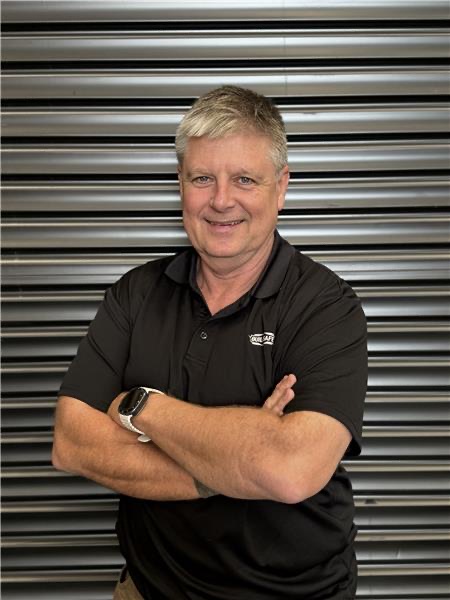
Mike Shipton is CEO of Buildsafe, Australia’s largest residential scaffold and height safety company. Buildsafe runs 150 trucks nationally from its Gold Coast headquarters, providing scaffold, edge protection, fall protection systems and BuildCam site monitoring across Australia.
About Buildsafe
With a reputation for innovation, reliability and worker protection Buildsafe offers superior safety solutions, where you can be sure of a compliant build from the outset. From our specially designed and engineered products right through to our responsive operations team, we have every stage of your build covered.
With a footprint covering much of Australia’s east coast, Buildsafe works very closely with those in the construction industry to provide safety solutions to everyone, from owner builders to major site developers; we have all your safety needs covered.
For more information, visit buildsafe.net.au.
For media inquiries please contact: media@buildsafe.net.au